

Secure networks: the foundation nobody sees
A well-designed network is invisible: it simply works. Nobody notices it… until it fails. Behind every stable video call, every checkout payment and every recording camera there is an infrastructure foundation most people never see. And that foundation is also your first line of defense.
Segmentation: don't put everything on one network
The most frequent mistake in growing companies is a single flat network where computers, cameras, printers, guest WiFi and servers all coexist. If one device gets infected, the problem spreads to everything.
The solution is segmentation: separating traffic into VLANs by function. That way guest WiFi never touches your internal systems and an incident stays contained in its segment.
A typical segmentation
- Administration and servers.
- Workstations.
- Cameras and IoT devices.
- Guest WiFi, fully isolated.
Cabling matters more than you think
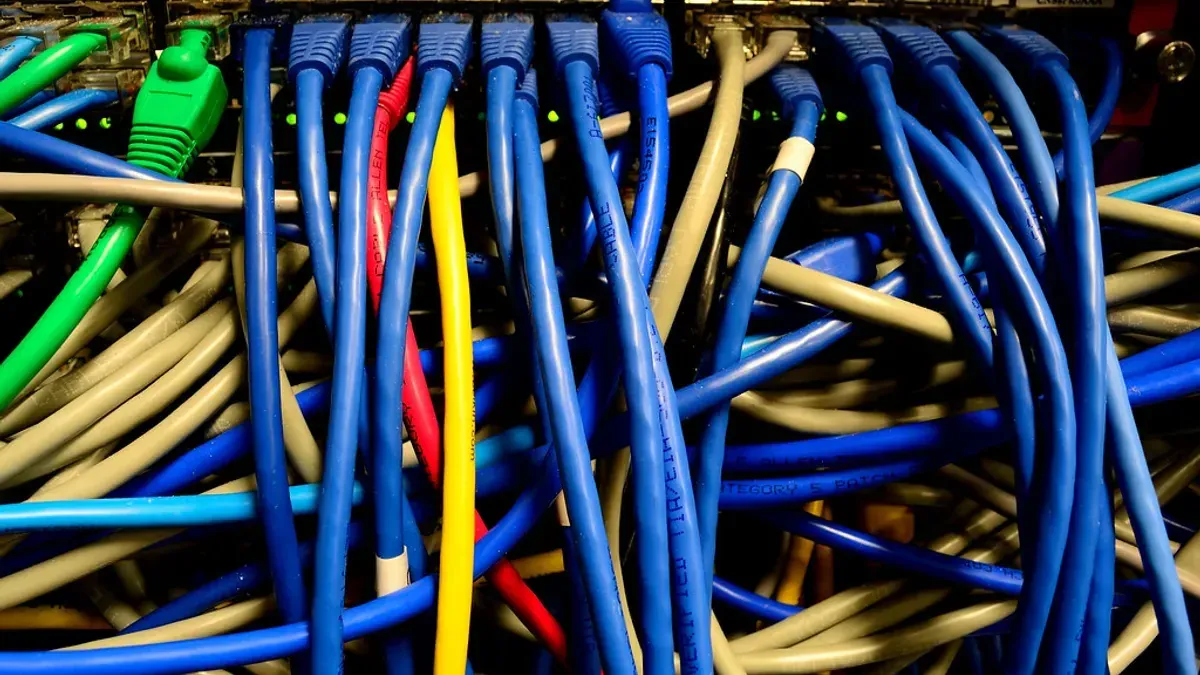
A top-tier firewall is useless over improvised cabling. Certified structured cabling, tidy racks and documentation are what prevent the intermittent outages that are impossible to diagnose. A reliable physical base is what lets you grow without rebuilding everything each year.
Remote access without opening the door to everyone
Remote work and branch offices demand secure connections. A VPN encrypts traffic between sites and enables controlled remote access, instead of exposing services directly to the internet. Combined with a firewall with clear rules, it sharply reduces the attack surface.
Best practices that make the difference
- Change the default credentials on every network device.
- Keep firmware up to date.
- Document the topology and label every point.
- Monitor: you can't protect what you can't see.
How we approach it at SimCodec
We have deployed complete institutional networks —cabling, routers, switches, high-density WiFi and secure networks with VPN— for schools and educational institutes. We design for growth and put security front and center from the start, not as a later patch.
What is network segmentation and why does it matter for a company?
Segmentation separates traffic into VLANs by function, such as administration and servers, workstations, cameras and IoT devices, and isolated guest WiFi. That way, if a device gets infected, the incident stays contained in its segment instead of spreading across the whole network.
Why does structured cabling matter so much for network security?
A top-tier firewall is useless over improvised cabling. Certified structured cabling, tidy racks and documentation prevent hard-to-diagnose intermittent outages and provide the physical base that lets you grow without rebuilding everything each year.
How do you secure remote access and branch offices for a company?
A VPN encrypts traffic between sites and enables controlled remote access instead of exposing services directly to the internet. Combined with a firewall with clear rules, it sharply reduces the attack surface.