
The August 12 solar eclipse: lessons in technology and preparedness
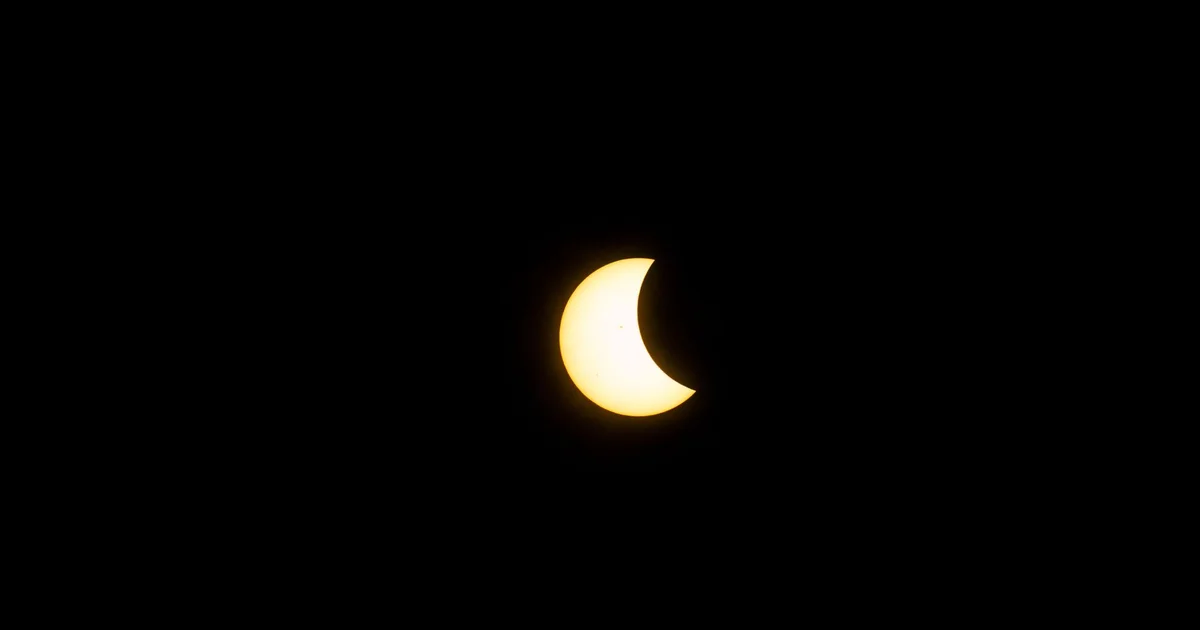
On August 12, 2026, the most anticipated total solar eclipse in generations will occur: an event that won't repeat for 150 years. The Moon will pass exactly between Earth and the Sun, casting its shadow over a narrow path crossing Russia, Greenland, the Atlantic and reaching Spain, where it will be total from Oviedo to Palma de Mallorca, passing through Burgos. It won't be visible from Ecuador, but there is a valuable lesson in how technology transformed this age-old event into something any business can leverage.
The technology that predicts the "unpredictable"
Eclipses are among the most faithful phenomena in astronomy: they are calculated decades in advance thanks to ephemerides, the mathematical models of the motion of Earth, the Moon and the Sun. Spain's National Geographic Institute publishes an interactive visualizer where you can explore the path of totality meter by meter, and NASA broadcasts the events live from observatories and space telescopes.
For a company, the lesson is direct: what seems unpredictable almost always has a model that anticipates it. The same data, simulation and monitoring principles astronomers use now apply to predictive equipment maintenance, inventory management and cybersecurity.
Solar energy: when the Sun "disappears"
During a total eclipse, solar photovoltaic generation drops to nearly zero across the shadow path for several minutes. Spain's power grid —with record renewable penetration in 2026— prepares months in advance by activating backup plants and adjusting demand.
The question is worth asking for any Ecuadorian company with solar panels: what happens to your operation when your own generation drops? The answer is not abandoning solar energy, but designing infrastructure with redundancy: battery backup, stable grid connection and real-time monitoring.
Seeing without harm: the value of standards
Looking at the Sun without protection can cause irreversible retinal damage —the retina has no pain receptors, and visual disorders appear later. Certified glasses meet the ISO 12312-2:2015 standard, which filters 100% of UV rays. In technology, this principle repeats itself: standards exist to protect you from risks you don't feel until it's too late. An untested backup, an unconfigured firewall or uncertified cabling are the same thing: they appear to protect, but they don't meet the standard.
How we approach it at SimCodec
At SimCodec we work every day with the same approach that makes predicting an eclipse possible: data, standards and preparedness. We were founded by five partners with ten years of joint experience and count on EPIC as our regional strategic partner. We design backup power systems for companies, certified networks and structured cabling, infrastructure monitoring and cloud solutions designed so operations don't stop when the environment changes. If your company depends on power, equipment or data, let's talk: we assess your points of failure and build the redundancy that keeps you running, eclipse or no eclipse.
When does the 2026 total solar eclipse occur and will it be visible from Ecuador?
It occurs on August 12, 2026, an event that won't repeat for 150 years; the path of totality crosses Russia, Greenland, the Atlantic and Spain, but it won't be visible from Ecuador.
What happens to solar power generation during an eclipse?
Solar photovoltaic generation drops to nearly zero for several minutes across the shadow path. The recommendation for companies with solar panels is to design infrastructure with redundancy: battery backup, stable grid connection and real-time monitoring.
What standard protects your eyes when observing a solar eclipse?
Certified glasses must meet the ISO 12312-2:2015 standard, which filters 100% of UV rays, since looking at the Sun without protection can cause irreversible retinal damage.